


Humans are the only mammal species that walks with a vertically straight back.In this regard, the spinal column experiences great overload.On the one hand, there is the predominance of a sedentary lifestyle, on the other, physical activity associated with lifting heavy objects, sudden movements, and even riding in public transport;All these factors contribute to the occurrence of such a common disease as osteochondrosis.Moreover, this disease is most often detected in the working part of the population.
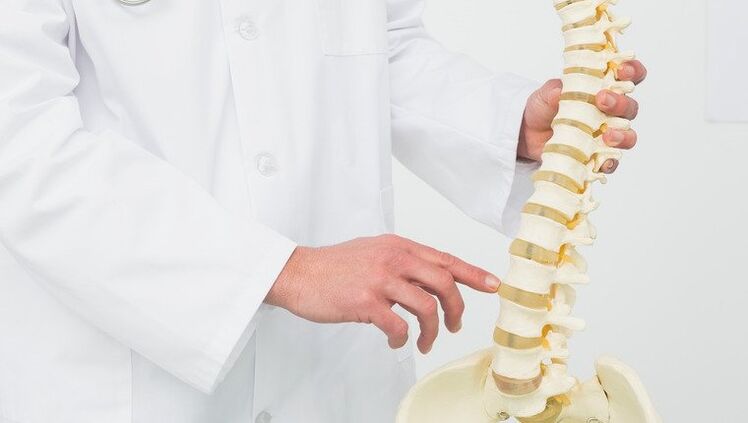
What is osteochondrosis, its types and stages
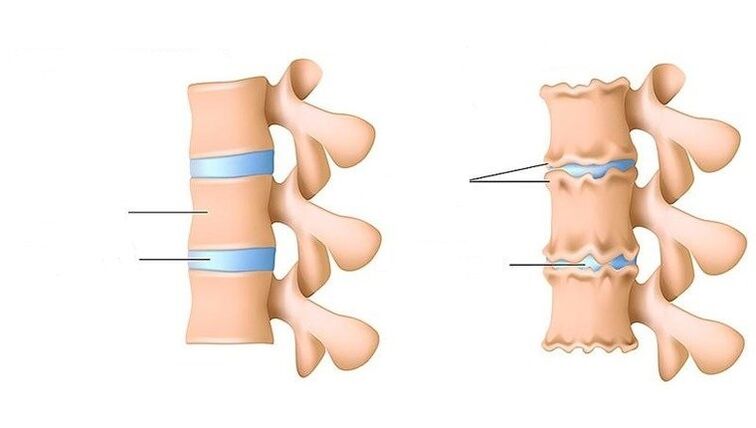
Osteochondrosis is a process in which the elasticity of the intervertebral discs is impaired.Under the influence of unfavorable factors, the disc loses fluid, becomes more compacted and less flexible.This happens due to the load on the spine during movement: pressure on the axis of the disc squeezes fluid out of it.During a night's rest, the spine should be completely restored, but with a sedentary lifestyle this does not happen, because the muscles and ligaments gradually lose their ability to stretch, and therefore to fully recover.
Osteochondrosis of the cervical spine
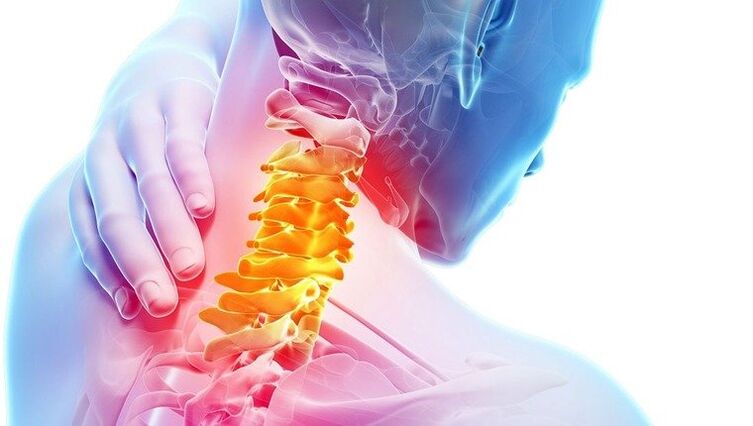
This type of osteochondrosis is considered the most insidious.The vertebrae that make up the neck are very close to each other.Even a slight deformation of one of them entails serious consequences: headaches, pressure surges, heart pain.If the disease is advanced, numbness in the limbs, tinnitus, difficulty breathing, and vision problems may appear.Some symptoms can be easily confused with a regular headache or fatigue, but if the symptoms recur regularly, you should see a doctor as soon as possible to ensure a correct diagnosis is made in time.
Osteochondrosis of the thoracic spine
The main symptom of this type is chest pain.Most often it appears on one side and is defined as aching or stabbing.A characteristic feature is the connection with movement, and with static loads the pain intensifies.There are two types of chest pain: one is an acute but short-lived attack, the other is mild but prolonged.If you visit a doctor in time, it is possible to cure the disease without resorting to surgical methods.
Osteochondrosis of the lumbar spine
This is the most common type of osteochondrosis.It affects both men and women with equal frequency.In the area where the lumbar region transitions to the sacral region, acute pain occurs.The main problem is the reduction of cartilage tissue, which leads to a reduction in the distance between the vertebrae, and this is a direct path to the formation of an intervertebral hernia.Pain can appear for various reasons: compression of nerve endings, narrowing of veins, pinching of the sciatic nerve.The exact cause will be determined by the doctor.
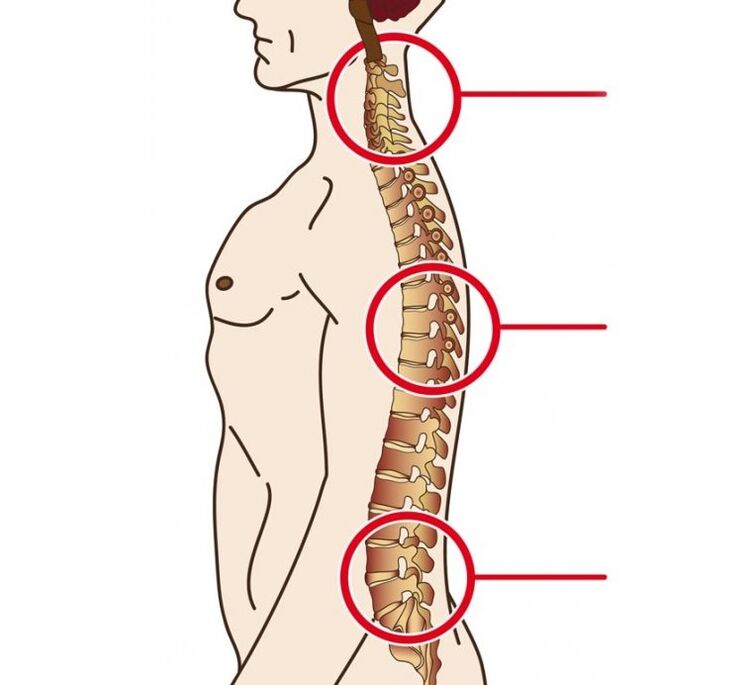
Damage to two or more parts of the spine
Osteochondrosis affecting the entire spine or several parts worsens a person’s general condition.The likelihood of hernias increases many times over.Constant pain makes it impossible to lead a normal lifestyle.Before the process of changes in cartilaginous tissue becomes irreversible, it is necessary to begin treatment of the disease as soon as possible.
The disease has four stages in its development:
- the initial stage is manifested by minor and short-term pain due to unstable functioning of the spine;
- at the second stage, the vertebrae are displaced, which shortens the distance between them;
- at the third stage, serious deformations of the intervertebral discs are already possible, up to the formation of a hernia;
- at the last stage, the person feels stiffness in movements, which may be accompanied by acute pain.
Symptoms and signs
The onset of the disease is difficult to trace, since there are no pronounced symptoms.Sometimes your back becomes numb after sitting or lying in one position for a long time, and a feeling of pins and needles appears in your legs.All these unpleasant sensations quickly pass, you just need to move or rub your stiff leg.Acute pain comes, as always, unexpectedly: a person stumbles, turns sharply - and a pain syndrome arises, in which it is scary to even think about the next step.Pressing on the disturbing area causes pain, movements are limited, and the muscles are tense.A protective spasm occurs;In this way, the body protects the painful area from further movements.This condition usually lasts for about 24 hours until the muscles can relax.
Thus, signs of osteochondrosis include discomfort in various parts of the body, accompanied by pain.Painful sensations can be concentrated in the neck, shoulders, back, chest.The described symptoms may include headache, dizziness, fatigue, heart pain, and loss of sensitivity in the limbs.Based on the localization of the pain syndrome, the doctor will be able to determine where the changes began in the spine.
Reasons for development
The causes of the disease include factors that interfere with proper nutrition of the disc and make its recovery impossible:
- prolonged stay of the body in positions that have a bad effect on the functioning of the spine (primarily sitting);
- injuries;This point especially applies to people involved in sports that involve heavy loads on the spine (for example, weightlifting);
- work associated with long-term static loads (for example, a worker on an assembly line, a hairdresser, and so on);With such work, congestion in the muscles and poor circulation are observed.
Since the main reason for the development of osteochondrosis is the uneven distribution of the load on the spine, other factors that at first glance seem unimportant can also affect human health.Carrying a bag in only one hand, the habit of sitting bent over, with a slouched back, sleeping on a soft feather bed, curvature of the neck position during sleep (high pillow), uncomfortable (albeit fashionable) shoes - all this also serves as a prerequisite for back diseases.An unhealthy lifestyle, obesity, and teenage scoliosis can further worsen the condition.
Risk factors include:
- tall people because their back muscles are poorly developed;
- everyone who leads a sedentary lifestyle;
- those who are forced by their profession to lift weights;
- truck drivers experiencing prolonged vibration;
- former athletes;
- those who already had similar cases of the disease in their family;
- pregnant women and women during menopause;
- elderly people;
- smokers.
How to diagnose the disease
If the patient detects the above symptoms, then he should come to the local physician, who will redirect the patient to a neurologist.To clarify the diagnosis, a neurologist may refer the patient to a more specialized specialist - a vertebroneurologist (a doctor who deals exclusively with diseases of the spine).A good chiropractor can also detect the disease by palpating the back.If a patient suspects a hernia, then a trauma surgeon is indispensable.
Instrumental methods are also used to make a diagnosis:
- x-ray of the spine;
- myelography (this is a picture of not only bones, but also nerve endings and other structures);
- examination of reflexes (the notorious hammer of a neurologist);
- computed tomography;
- nuclear magnetic resonance (the most accurate and safe diagnostic method);
- magnetic resonance imaging (an indispensable method for intervertebral disc pathology).
The doctor also prescribes the usual tests for the patient.
In a general blood test, you should pay attention to the leukocyte count and ESR.An increase in values will indicate the presence of an inflammatory process in the body.A low hemoglobin level will indicate a lack of protein food, which can directly affect the development of degenerative processes.
A general urine test will show what percentage of mineral salts exists in the body.An increased rate indicates a violation of the correct balance of nutrients in food.
Elevated blood glucose also indicates that the patient is not eating properly.In addition, this may be the first symptom of diabetes, which leads to complications for all organs of the human body.
An analysis of cholesterol levels in the blood is also very important, as it shows the condition of the blood vessels.
Treatment of osteochondrosis
In the initial stage of the disease, drug treatment is used in a minimal amount.Medicines are needed to alleviate the patient’s condition, relieve inflammation, and improve metabolism.If these procedures are not enough, the doctor prescribes a blockade, that is, injections, which are a fairly effective remedy.Elderly people are prescribed drugs that do not accumulate in the body.
Physiotherapy complements drug treatment well.Physiotherapy methods include: ultrasound, the use of a magnetic field, low-frequency current, laser therapy and so on.The principle of action is aimed at dilating blood vessels and increasing blood circulation.In this way, an analgesic effect is achieved and the impaired immune response is normalized.
Physical therapy also has a beneficial effect on the spine.A properly selected set of exercises can put the most neglected patients back on their feet.Under the influence of physical activity, not only impaired functions are restored, but also the general mental state of the patient improves.The very prescription of such therapy gives confidence to the patient that he will be able to return to a full-fledged lifestyle.A simulator such as a special treatment board has proven itself to be excellent.This is an inexpensive and effective way to restore spinal function.
The action of massage is based on complex metabolic processes.Thanks to it, blood and lymph circulation improves in the affected area, which promotes metabolism, relaxation of muscle tone, joint mobility, and improvement of skin condition.Massage relieves pain, fatigue, and improves the physical condition of the body.
Manual therapy should only be performed by a professional, since an illiterate specialist can harm the patient.Such therapy is a set of measures that can radically improve a person’s condition.A good specialist can free the patient from functional blockade and restore the ability to fully use the affected organ.The impact is carried out using pressure, twisting, pushing, jerking and so on.
Spinal traction gives good results.It can be underwater or dry.Used to increase space between disks.Underwater, as the name implies, takes place under water, and dry - on tables with special equipment.Extension can be vertical or horizontal, depending on the position of the body.
Complications of ignoring the disease
It is believed that everyone has chondrosis.But this is not a reason to ignore the problem.This is not a completely harmless diagnosis.In particularly advanced cases, the disease can lead to disability.
If treatment is ignored, the following complications may subsequently occur:
- hernia;
- protrusion (initial change in the intervertebral disc);
- kyphosis (hump on the back);
- radiculitis;
- salt deposits;
- spinal cord stroke;
- circulatory disorders;
- leg paralysis
Untreated cervical osteochondrosis can cause headaches, dizziness, and insomnia.The chest turns into intercostal neuralgia.Lumbar causes such consequences as inflammation of the sciatic nerve, malfunction of the genitourinary system.The main condition for the treatment of osteochondrosis is compliance with the stages, and only constant targeted efforts will give a good result.
Disease prevention
Prevention plays an important role in maintaining a healthy spine.The first step is to reduce the risk of injury in the workplace.This applies to dynamic and static loads.If such a possibility exists, you should move to another place of work at the first sensation of pain in your back.Otherwise, you need to take the necessary measures: constantly change your body position, optimize your workplace, do gymnastics or at least some exercises.Yoga classes can play a special role.This ancient Indian system of poses, so-called asanas, can help remove all tightness in the body, relax and stretch the spine.
Correct work with weights is of no small importance in prevention.
There are several rules that everyone who protects their back must follow:
- Do not lift weights with outstretched arms;it would be correct to sit down and, pressing the load to your chest, stand up with a straight back;
- You cannot carry a load in one hand;it would be correct to distribute its weight into two, approximately equal parts;
- even if the luggage weighs little, you need to periodically stop and rest your hands;
- the spine must be prepared for the load;A regular set of exercises to strengthen the back, that is, the muscle corset, can help with this.
If it is not possible to do exercises regularly, you can replace it with more familiar walking.It is advisable to take at least 8,000 steps every day, but you must ensure good posture and combine steps with proper breathing;While walking, you can try different walking options: on your toes, on your heels, raising your legs high, race walking.If you don’t have time for this, then even a short but energetic walk to work and back will benefit the body.
Swimming combines the opportunity to relax the vertebrae and feel physical activity.In water, Archimedes' law applies, which reduces the weight of the human body, so the muscles relax and the spine stretches.In addition, swimming allows you to keep your body in good shape.
Running can also serve as a disease prevention.It must be remembered that both a lack of physical activity and its excessiveness are detrimental to the spine.You need to carefully monitor the condition of your body and avoid pain.
If signs of inflammation appear, a medicinal applicator can help.When the needles come into contact with the patient’s skin, the nerve endings are irritated, the blood vessels dilate, blood circulation improves and the pain syndrome weakens.Longer exposure, up to 40 minutes, leads to muscle relaxation.
A proper diet is one of the most effective ways of prevention.
It should pursue several goals:
- fight against excess weight;
- the required amount of vitamins and minerals;
- preventing dehydration of the body;
- slowing down destructive processes.
In order for the diet to achieve its goals, the food must be low in calories and include dairy products, fish, eggs, herbs, and vegetable oil.Doctors advise eating dishes based on broths: soups, borscht, jellied meats, aspic.Indeed, such foods contain protectors that protect cartilage tissue.But older people should approach such a diet with caution, since the fat contained in concentrated broths can clog a blood vessel in the brain.
The health of the spine is in the hands of every person.If, at the first pain, you start doing gymnastics, sign up for a swimming pool, and review your diet, you can not only slow down the process of destruction of the vertebrae, but also improve the health of the body in general.If you don’t have the time or desire to lead an active lifestyle, then you need to follow the basic safety rules described above in this article.